Why the label beats the brand
Prenatal vitamins come in many forms and prices, but the evidence is about what's inside: a handful of nutrients, in the right amounts.
The American College of Obstetricians and Gynecologists (ACOG) recommends a prenatal vitamin for most pregnant people to make sure they get enough folic acid and other nutrients (NIH ODS).
Take the free supplement quiz →
1. Folic acid: 400 to 800 mcg, starting before pregnancy
This has the strongest evidence. The US Preventive Services Task Force recommends that everyone who is planning to or could become pregnant take 400 to 800 mcg of folic acid daily, its top (A) grade (USPSTF, 2023). A Cochrane review of 5 trials (6,708 births) found that daily folic acid lowered the risk of neural tube defects (serious birth defects of the brain and spine) by about 70%. Many of the women had already had an affected pregnancy, but the trial in women without that history also found fewer cases (De-Regil et al., 2015).
These defects happen in the first few weeks of pregnancy, often before you know you're pregnant, so the CDC advises starting at least 1 month before trying (CDC).
Some brands swap folic acid for methylfolate (5-MTHF). It hasn't been tested in trials for preventing neural tube defects; the CDC says folic acid is the only form shown to help, and that people with an MTHFR gene variant can still process folic acid (CDC).
If you've had a pregnancy affected by a neural tube defect, talk with your doctor before trying again. The CDC's advice is 4,000 mcg a day, well above the 1,000 mcg upper limit, so take it only under medical guidance, never by doubling up on prenatals (NIH ODS).
Labels show folate in mcg DFE: 400 mcg of folic acid equals 680 mcg DFE.
2. Iodine: 150 mcg (many prenatals skip it)
Iodine helps make thyroid hormone, which a baby's developing brain needs. The American Thyroid Association recommends 150 mcg a day, as potassium iodide, for anyone planning a pregnancy, pregnant or breastfeeding (NIH ODS).
Yet of 59 best-selling US prenatal vitamins in 2016–2017, only 34 (58%) contained any iodine, and some used kelp, whose iodine content varies a lot (Patel et al., 2019). The adult upper limit is 1,100 mcg a day from all sources (900 mcg under 19), and some iodine-only supplements exceed it (NIH ODS).
3. Iron: the pregnancy amount, not a megadose
Iron needs rise to 27 mg a day in pregnancy (food and supplements combined); the upper limit is 45 mg unless your doctor prescribes more (NIH ODS). In a 2024 Cochrane review (57 trials), iron supplements may have lowered anemia at the end of pregnancy (4.0% vs 7.4%); effects on the baby were small or uncertain (Finkelstein et al., 2024).
ACOG recommends low-dose iron from the first trimester and an anemia blood test in the first trimester and again at 24 to 28 weeks (NIH ODS). The US Preventive Services Task Force found too little evidence to judge routine iron screening or supplements in pregnant people without symptoms (USPSTF, 2024). Don't add a separate iron pill unless a test shows you need it and your doctor or midwife advises it. Keep iron away from children: US labels must warn that accidental iron overdose is a leading cause of fatal poisoning in children under 6 (FDA).
| Nutrient | Look for | Why |
|---|---|---|
| Folic acid | 400–800 mcg folic acid | Fewer neural tube defects |
| Iodine | 150 mcg | Thyroid hormone for baby's brain |
| Iron | About 27 mg (under 45) | May lower anemia |
| DHA | Fish 8–12 oz/week, or ask | Fewer preterm births in trials |
| Choline | Check the label | Most get less than advised |
| Vitamin A | Mostly beta-carotene | High doses can cause defects |
4. DHA, choline and vitamin A
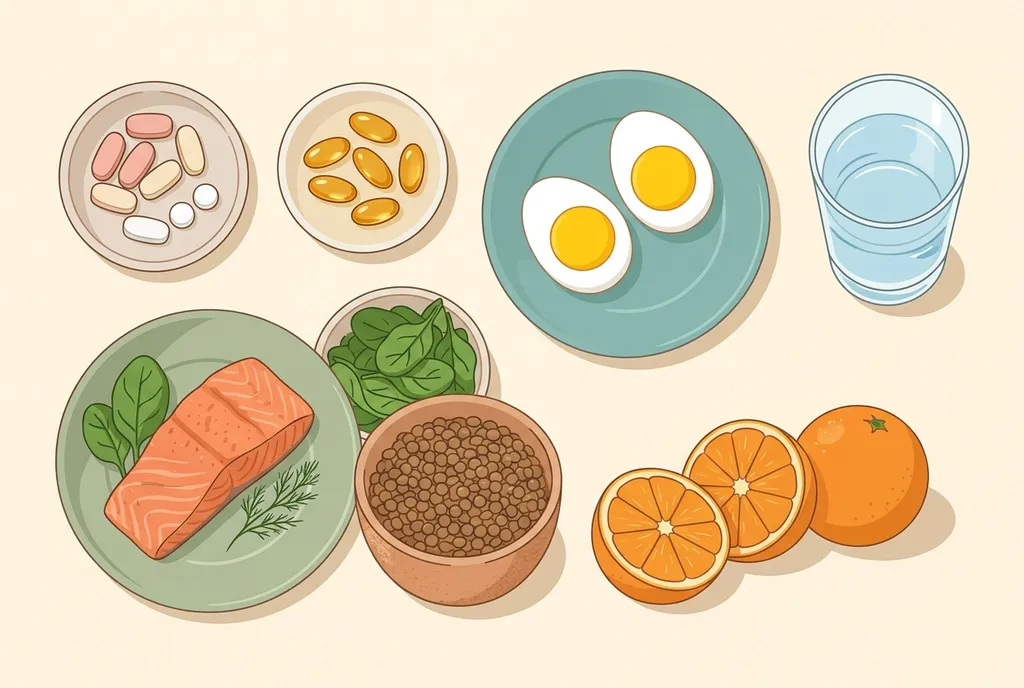
DHA. Not every prenatal includes it. In a Cochrane review, omega-3s in pregnancy (mostly supplements) lowered births before 37 weeks (11.9% vs 13.4%) and before 34 weeks (2.7% vs 4.6%), though slightly more pregnancies went past 42 weeks (Middleton et al., 2018). ACOG and the FDA advise 8 to 12 ounces a week of lower-mercury seafood (NIH ODS). If you rarely eat fish, ask your doctor about a prenatal DHA supplement from fish oil or algae, not cod liver oil, which contains vitamin A (NHS).
Choline. About 90 to 95% of pregnant people get less than the Adequate Intake of 450 mg a day, and prenatals typically contain little or none (NIH ODS). Eggs, meat, fish and dairy are the richest sources.
Vitamin A. Too much preformed vitamin A (retinol, retinyl palmitate or acetate) can cause birth defects. Experts advise anyone who is or might be pregnant not to take vitamin A supplements above 3,000 mcg RAE (10,000 IU) a day; that's also the upper limit for total preformed vitamin A from food and supplements, liver included (2,800 mcg under 19). Beta-carotene isn't known to cause birth defects (NIH ODS). The NHS advises avoiding retinol supplements and liver in pregnancy altogether (NHS).
How to choose
Pick a prenatal vitamin with iodine that ticks the table above, then look for a USP or NSF seal: it means the product was tested to contain what the label says without harmful contaminants, not that it's safe or works.
Tell your doctor, midwife or pharmacist about every supplement you take, and ask before adding herbs or extra single vitamins. Never stop or change a prescribed medicine on your own. If you're pregnant or think you might be, book an appointment early for blood tests and advice.
The bottom line
The best prenatal vitamin isn't the priciest. It has 400 to 800 mcg of folic acid (started at least 1 month before pregnancy), 150 mcg of iodine, about 27 mg of iron (under 45 mg) and little or no preformed vitamin A, plus a plan for DHA and choline. Bring the bottle to your first appointment.