
The Omega-3 Problem on Plant-Based Diets
Vegans and vegetarians typically have low blood levels of EPA and DHA, similar to omnivores who rarely eat fish (Sarter et al., 2015). The long-chain EPA and DHA are found almost exclusively in marine sources such as fish, seafood and algae.
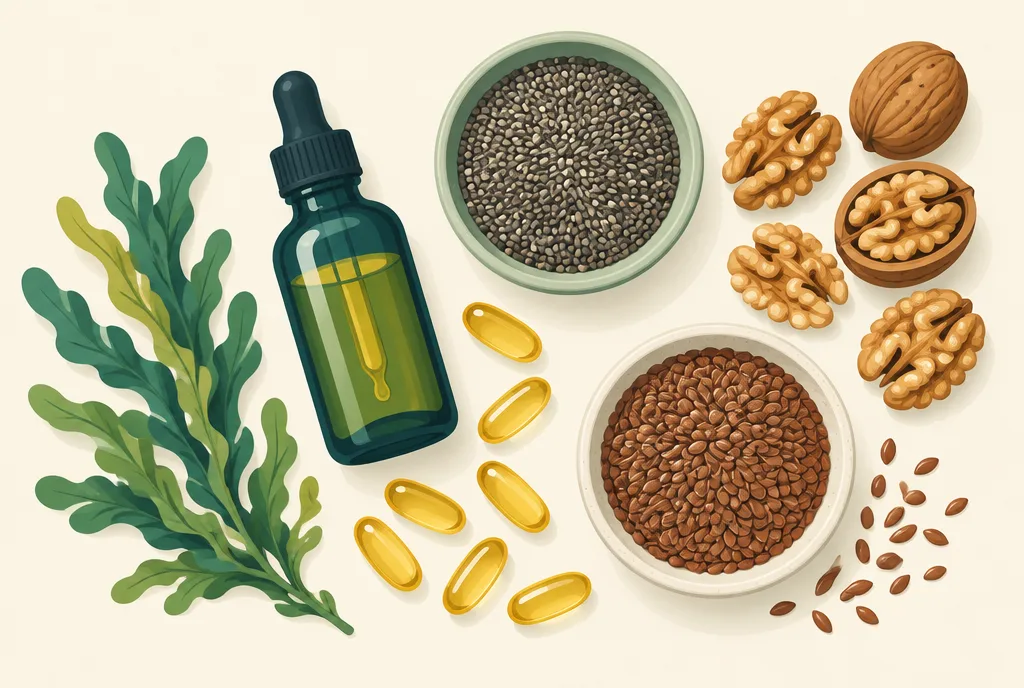
ALA (alpha-linolenic acid), the short-chain omega-3 found in flaxseed, walnuts, and chia seeds, converts to EPA and DHA in the body. But only a small fraction of ALA becomes EPA (estimates are roughly 5–10%), and very little, often under 1%, becomes DHA, especially in men (Burdge et al., 2002).
Take the free supplement quiz →
Where Fish Really Get Their Omega-3
Here's the key insight: fish don't synthesize EPA and DHA. They get them by eating microalgae and other marine organisms. The fatty acids bioaccumulate up the food chain.
This means you can go directly to the source — algae — and skip the fish entirely. Algae oil provides DHA directly, and some products also contain EPA, so check the label (NCCIH). It also avoids concerns about mercury, PCBs, overfishing, and fish smell. In one study, algal DHA capsules raised blood DHA about as well as cooked salmon (Arterburn et al., 2008), and in vegans a daily algae supplement of about 250 mg raised omega-3 blood levels (Sarter et al., 2015).
EPA vs DHA: What's the Difference?
EPA (Eicosapentaenoic Acid):
- Involved in regulating inflammation
- EPA-rich formulas have shown a modest benefit for depressive symptoms in some small trials of people with diagnosed depression; in people without depression the large VITAL-DEP trial found no mood benefit
- Studied for heart health, mostly in fish-oil and prescription EPA trials
DHA (Docosahexaenoic Acid):
- DHA is the main omega-3 fat in the brain and retina
- Important for infant brain and eye development
- Eye health (concentrated in the retina)
Studies have used a wide range of doses, and there is no official separate target for EPA or DHA. Health bodies suggest about 250–500 mg/day of EPA+DHA for general health (EFSA: 250 mg/day). Higher amounts are sometimes used for specific conditions under medical advice.
Choosing an Algae Oil Supplement
When evaluating algae oil supplements, look for:
- Total EPA+DHA content per serving — research suggests roughly 250–500 mg EPA+DHA per daily serving for general health
- EPA as well as DHA: many algae oils are DHA-only, so check the label if you want both
- Absorption: take it with a meal containing fat for best absorption
- Third-party testing: Look for IFOS or similar certification
- Freshness: Omega-3s oxidize easily. Check the oxidation markers (TOTOX score)
- No filler oils: Some supplements dilute with cheap vegetable oils
Fish Oil vs Algae Oil
Both provide bioavailable EPA and DHA (check algae oil labels for EPA). The choice often comes down to:
| Factor | Fish Oil | Algae Oil |
|---|---|---|
| EPA+DHA content | High | Moderate–High |
| Sustainability | Variable | More sustainable |
| Mercury/PCBs | Very low in purified products | None |
| Suitable for vegans | No | Yes |
| Fish odor/burps | Common | Minimal |
For vegans and vegetarians, algae oil is the practical choice. For omnivores, high-quality fish oil works too.
Safety
Omega-3 supplements are generally well tolerated, but trials have linked them to a higher risk of atrial fibrillation, especially above 1 g/day (Gencer et al., 2021). If you have heart rhythm problems or take blood thinners, check with your clinician first.
Evidence Level: Depends on the goal
Algae oil reliably raises blood DHA, and that is its best-proven effect. For the heart, omega-3 supplements have not been shown to prevent heart attacks or deaths. The large VITAL trial (Manson et al., 2019) found no significant effect on major cardiovascular events, and the Cochrane review of 86 trials (162,796 people) found little or no effect on deaths or cardiovascular events, with at most a small, low-certainty reduction in coronary events (Abdelhamid et al., 2020). What omega-3 clearly does is lower high triglycerides (by about 15% in that same review), and that takes about 2 g a day of EPA+DHA, well above the general-health amount, so it is a dose to work out with your doctor. These trials used fish-derived oils, not algae oil.