

Why not just take a multivitamin?
It is the most common question we get from quiz-takers. The marketing is irresistible: one pill, every nutrient, $15 a bottle — so why juggle six supplements?
The honest answer: a multivitamin is a floor against deficiency. Individual supplements are targeted treatments. Confusing the two is one of the biggest reasons people stop seeing results.
Take the free supplement quiz →
---
100% RDA is a floor, not a treatment
The RDA is the amount that prevents frank deficiency disease in 97.5% of healthy adults — not what is optimal for energy, sleep, mood, or heart health. A multivitamin almost always contains roughly 100% of the RDA per ingredient: enough to keep you out of scurvy territory, rarely enough to fix what people actually supplement for.
The pattern is stark: for every nutrient with serious clinical evidence behind it, the therapeutic dose is 5–50× what a multivitamin contains. The Endocrine Society guidelines work with 2,000–5,000 IU of vitamin D, not the 600–1,000 IU in a multi — not enough to raise 25-hydroxyvitamin D into the 30–50 ng/mL range tied to optimal bone, immune, and metabolic function. A multi cannot fit a meaningful magnesium dose and contains zero omega-3, creatine, or plant-derived compounds.
Form matters as much as dose
Even when the right nutrient is present, multis use the cheapest, least-absorbable form. Magnesium oxide — the form in most multivitamins — is poorly absorbed compared to organic salts like glycinate and citrate, with 4–5× bioavailability differences documented. About 25–30% of people carry the MTHFR C677T polymorphism, which impairs conversion of the synthetic folic acid in nearly every multi; methylfolate works dramatically better for them. Multis include vitamin K1, yet the Rotterdam Heart Study tied K2 (menaquinone) intake — not K1 — to lower coronary artery calcification and cardiovascular mortality. Same story with B12: cheap cyanocobalamin instead of active methylcobalamin.
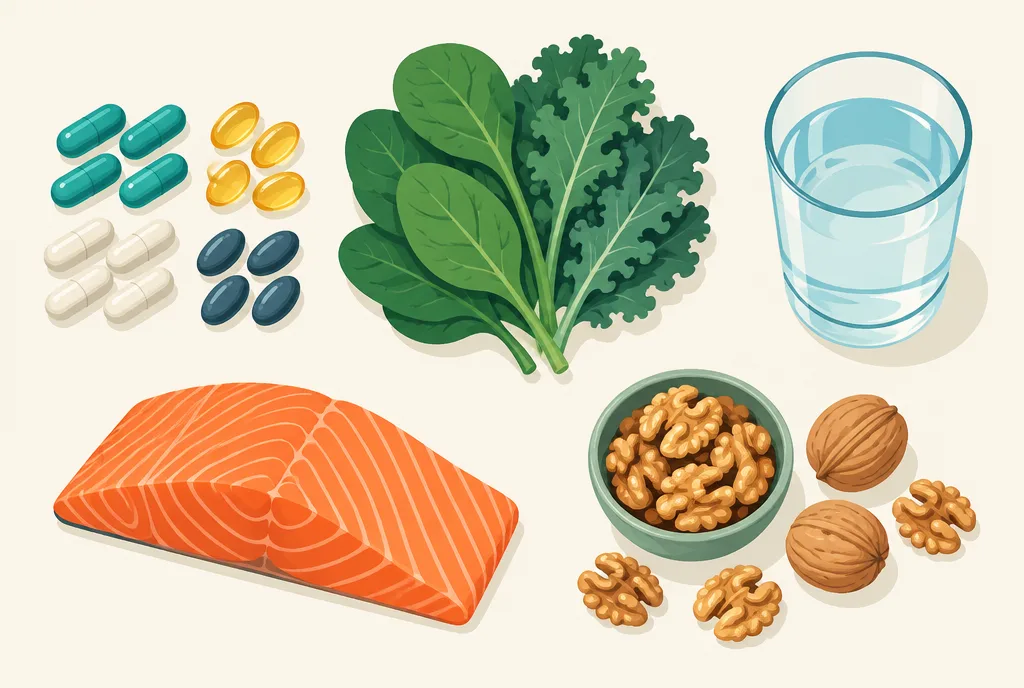
At a glance
| Nutrient | Typical multi dose | Clinical dose range |
|---|---|---|
| Vitamin D3 | 600–1,000 IU | 2,000–5,000 IU |
| Magnesium | 50–100 mg | 200–400 mg |
| Omega-3 EPA+DHA | 0 mg | 1,000–2,000 mg |
| Creatine monohydrate | 0 g | 3–5 g |
| Vitamin B12 | 6–12 mcg | 500–1,000 mcg for deficiency |
| CoQ10 | 0–30 mg | 100–300 mg |
| Curcumin | 0 mg | 500–1,500 mg |
---
Cramming minerals into one pill backfires
Several minerals compete for the same intestinal transporters. Calcium dose-dependently blocks iron absorption — a 300 mg dose of calcium can reduce iron absorption by up to 60% — so a multi delivering both at once is fighting itself. Long-term high-dose zinc induces copper deficiency by trapping copper in intestinal cells. Iron, zinc, manganese, and copper also share the DMT1 transporter, so absorption per nutrient drops when they arrive together. Minerals do best separated across the day, with food, in bioavailable forms — the opposite of a one-pill-all-in design.
You probably do not want everything in that pill
Multis also deliver nutrients many people should actively avoid. Men and post-menopausal women lose very little iron; the excess accumulates and is associated with oxidative stress, insulin resistance, and cardiovascular events — yet iron-free multis are hard to find. Most multis include vitamin A as retinyl palmitate, and a classic NEJM study linked daily intake above 10,000 IU in early pregnancy to a 4–5× increase in birth defects; beta-carotene is safer. And the synthetic alpha-tocopherol in nearly every multi suppresses the rest of the vitamin E spectrum and has proven ineffective or harmful in large trials.
When a multivitamin actually earns its place
- A deficiency floor for chaotic or restrictive diets. The Physicians Health Study II found a small but real 8% reduction in cancer incidence over 11 years.
- Prenatal supplementation — nearly every nutrient demand rises at once, and one pill beats 6–8.
- Older adults — declining stomach acid reduces B12, calcium, and folate absorption.
- Adherence beats perfection. One multi you take wins over six pills you will not.
But a multi should not be your primary intervention for an actual symptom or goal — low energy, poor sleep, joint pain, an elevated lab marker all call for a targeted supplement at a clinical dose.
The hybrid approach most people need
- Layer 1 — diet floor. A nutrient-dense whole-food diet does what a multi promises, better.
- Layer 2 — optional basic multi. Pick one without iron unless you need it, with methylfolate rather than folic acid, and K2 MK-7 if available.
- Layer 3 — targeted high-dose supplements for your actual situation. D3 if your blood test shows low 25-OH-D. Omega-3 if you rarely eat fatty fish. Magnesium glycinate for sleep or anxiety. Creatine if you lift. This layer is what moves the clinical needle; the multi is just a backstop.
Bottom line
A multivitamin is a generic seatbelt; individual targeted supplements are the active treatment. If you are fixing something — a deficiency, a symptom, a lab marker, an athletic goal — dose, form, and timing matter enormously, and a multi cannot deliver them at clinical levels. If you want cheap insurance against a patchy diet, a multi is a reasonable floor. Most people benefit from both: a basic multi as backstop, plus 2–6 targeted supplements at clinical doses for the issues their goals, symptoms, and lab work flag — exactly what our quiz identifies.
Take the free supplement quiz →
*This article is for educational purposes only and is not medical advice. Consult a healthcare provider before starting any supplement regimen, especially if you take prescription medications or are pregnant or nursing.*