
The promise on the label
Every autumn the same bottles move to the front of the pharmacy: vitamin C, zinc, vitamin D, probiotics, all promising to "boost" your immune system. The idea is appealing, but your immune system is not a dial you can turn up. What a supplement can realistically do is fill a gap that is holding it back, or trim a few days off a cold.
Some of these bottles have decent trials behind them. Others mostly have good marketing. Here is how the four most popular options actually compare.
Take the free supplement quiz →
Vitamin D: a small edge, if you take it daily
Vitamin D has the largest body of research. A 2021 meta-analysis pooled 46 randomized trials with more than 75,000 participants and found that people taking vitamin D were slightly less likely to get at least one acute respiratory infection than people on placebo (Jolliffe et al., 2021). The overall effect was small. The protective signal was clearer in trials that gave vitamin D every day, at modest doses of 400 to 1,000 IU, than in trials using big weekly or monthly doses.
Not every review agrees. The NIH notes that other meta-analyses found no reduction in respiratory infections at all (NIH Office of Dietary Supplements). So treat vitamin D as a reasonable daily habit, especially in darker months, not a shield.
How to try it: a daily vitamin D3 of 1,000 IU with a meal. Stay at or below 4,000 IU a day, the adult upper limit, unless your doctor has prescribed more after a blood test.
Vitamin C: won't prevent colds, may shorten them
Vitamin C is the classic cold remedy, and the evidence is more modest than its reputation. A Cochrane review of 29 trial comparisons found that taking at least 200 mg a day did not reduce how often ordinary people caught colds (Hemilä and Chalker, 2013). Regular use did shorten colds a little, by about 8 percent in adults and 14 percent in children. Taking it only once symptoms started showed no consistent benefit.
The exception was people under heavy physical stress. In marathon runners, skiers and soldiers training in subarctic conditions, regular vitamin C roughly halved the risk of a cold.
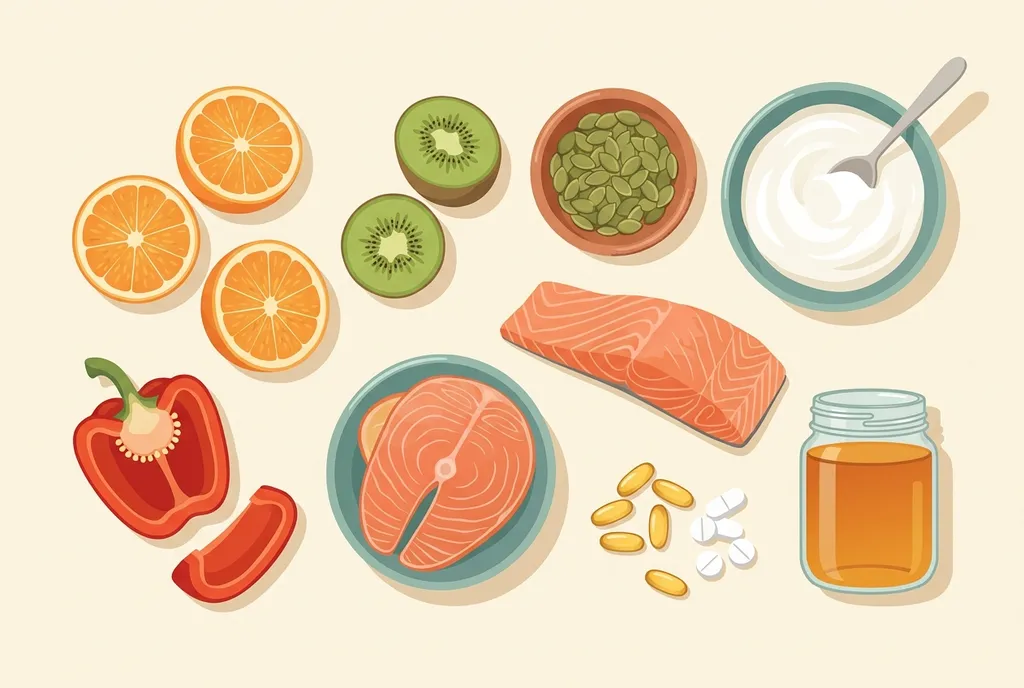
Food covers most people's needs easily: citrus, kiwi, bell peppers and broccoli are all rich sources. If you supplement, keep the total under 2,000 mg a day, since higher intakes can cause diarrhea, nausea and cramps (NIH ODS).
Zinc: for the first days of a cold, not every day
Zinc is the most interesting and the most misused. Taking it daily to prevent colds does not seem to work: a 2024 Cochrane review of 34 trials found little or no reduction in the risk of catching one (Nault et al., 2024). The same review found zinc may shorten colds that have already started, though the evidence was low certainty and minor side effects such as an unpleasant taste or nausea were more common.
The lozenge trials are where the signal is strongest. A meta-analysis of seven trials found colds were about a third shorter on average in people who sucked zinc acetate or gluconate lozenges (Hemilä, 2017).
The catch is the dose. Those trials used more than 75 mg a day, above the 40 mg adult upper limit, and only for the length of a cold. Long-term high doses of zinc, 150 mg a day or more, can lower your copper levels and actually weaken immune function (NIH ODS). Lozenges are a short-term tool, so stop when the cold clears.
Probiotics: promising, but low certainty
A 2022 Cochrane review of 23 trials with nearly 7,000 people found that probiotics may reduce the number of people who get an upper respiratory infection, may shorten episodes by about a day, and likely reduce antibiotic use (Zhao et al., 2022). Side effects were minor, mostly gut symptoms. Two caveats: most of the evidence was low certainty, and the trials used many different strains, usually for more than three months. If you try a daily probiotic, give it a whole season, not a week.
Side by side
| Supplement | Best evidence | Adult upper limit |
|---|---|---|
| Vitamin D | Slightly fewer infections | 4,000 IU/day |
| Vitamin C | Slightly shorter colds | 2,000 mg/day |
| Zinc lozenges | Shorter colds, short-term | 40 mg/day long term |
| Probiotics | Possibly fewer colds | None set |
When to see a doctor instead
Lots of infections, infections that keep coming back, a fever that will not settle, or a cold that lasts beyond two weeks are reasons to see a doctor, not to add another bottle. Deficiencies in nutrients such as vitamin D, zinc, iron and B12 might weaken immune function (NIH ODS), and a blood test is the only way to know. If you are pregnant, have a weakened immune system, or take prescription medication, check with your doctor before starting any of these, and never change a prescription on your own.
The bottom line
No supplement turns your immune system up. Daily vitamin D may slightly cut your odds of a respiratory infection, vitamin C and zinc lozenges may shave time off a cold, and probiotics show promise with weaker evidence. Sleep, a varied diet and the vaccines your doctor recommends still do the heavy lifting. Want to know which gaps your own diet is most likely to have? The free quiz maps your habits, symptoms and goals to the same evidence used here.