
How Common Is Low Vitamin D?
Low vitamin D is common worldwide, though estimates vary widely depending on the cutoff used. In the United States, most people have adequate blood levels, but almost one in four have levels that are too low or inadequate (NIH ODS). Vitamin D3 (cholecalciferol) acts like a hormone in the body and helps regulate many genes.
Take the free supplement quiz →
Why Do Some People Run Low?
Several factors can work against adequate vitamin D levels:
Limited sun exposure: UV-B radiation from sunlight triggers D3 synthesis in skin, but many people in northern latitudes don't get enough exposure — especially in winter. Note that your skin does not make vitamin D from sunlight that comes through a window.
Sunscreen? In lab tests sunscreen blocks vitamin D production, but in real life sunscreen users don't appear to have lower vitamin D levels (Neale et al., 2019), so keep using it to protect against skin cancer.
Indoor lifestyles: Office workers and those who spend most time indoors rarely get the outdoor sun exposure needed for synthesis.
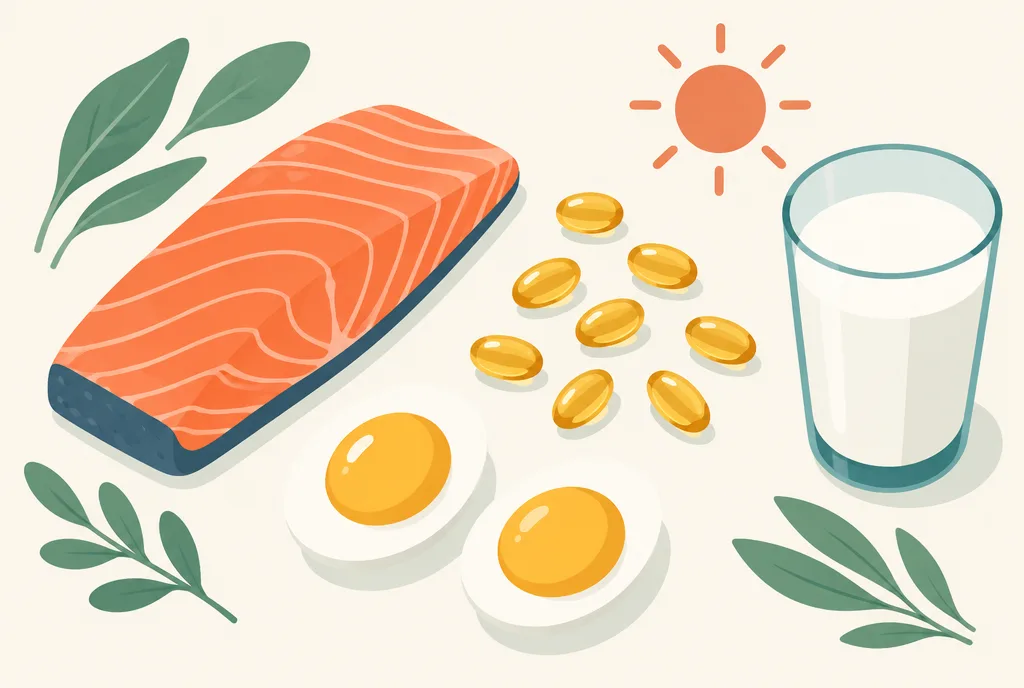
Diet: Very few foods naturally contain vitamin D. It's hard to get enough from food alone unless you eat fortified foods or fatty fish regularly.
Dark skin: The darker your skin, the less vitamin D you make from sunlight, so people with darker skin need more sun exposure to make the same amount of D3.
What Does Vitamin D Actually Do?
- Calcium absorption: Without enough vitamin D, your body can't absorb calcium well, and bones can weaken over time.
- Immune function: Vitamin D receptors are present on many immune cells. Deficiency is associated with increased susceptibility to respiratory infections.
- Mood: Low vitamin D has been linked to depression, but large trials found that taking vitamin D doesn't prevent or treat it — including the VITAL trial of 18,353 adults aged 50+, where 2,000 IU/day for about five years did not lower depression risk (Okereke et al., 2020).
- Muscle function: Severe deficiency can cause bone pain and muscle weakness.
What Blood Levels Mean
NIH says levels of 20 ng/mL or above are adequate for most people, below 12 ng/mL is too low, and above 50 ng/mL is too high (NIH ODS). Some practitioners aim higher, but NIH considers levels above 50 ng/mL too high, and experts haven't found a proven "optimal" target (Endocrine Society, 2024).
A blood test (25-hydroxyvitamin D) is the only way to know, but routine testing isn't recommended for healthy people; ask your doctor if you're in a higher-risk group.
How Much to Supplement?
Most adults need 600–800 IU/day. If you don't get much sun or fortified food, research suggests 1,000–2,000 IU/day, a common, safe supplement dose. Don't exceed 4,000 IU/day from all sources unless your doctor prescribes it. Those with confirmed deficiency may need higher doses under medical supervision.
What about vitamin K2 and magnesium? Vitamin K and magnesium both play roles in calcium and vitamin D metabolism (magnesium helps your body process vitamin D), but there's no good evidence you need to take them with vitamin D. If you take warfarin (Coumadin) or another blood thinner, don't start vitamin K without talking to your doctor.
Safety: Talk to your doctor before supplementing if you take thiazide diuretics, steroids, statins or orlistat, or if you have kidney disease, kidney stones or high calcium. Vitamin D toxicity almost always comes from taking too much in supplements, not from sun or food. If you're pregnant or breastfeeding, ask your doctor what dose is right for you.
Evidence Level
Evidence: strong for bone health when you're low; limited for respiratory infections (the pooled trials show a small reduction, but a 2022 UK trial of 6,200 adults that tested people and gave vitamin D to those who were low found no reduction in infections (Jolliffe et al., 2022)); weak for mood and most other claims. A 2021 meta-analysis of 46 RCTs found that supplementation modestly reduced the risk of acute respiratory infections, mainly with daily doses of 400–1,000 IU (Jolliffe et al., 2021).
Always consult a healthcare provider before starting supplementation, especially at high doses. Not sure whether Vitamin D is the gap your routine actually has? Our free quiz can point you to what is worth testing first.