The honest answer up front
Weight-loss supplements promise to burn fat or curb your appetite. The NIH Office of Dietary Supplements is blunt: there's little scientific evidence that they work, many are expensive, some can interact with medicines, and a few might be harmful (NIH ODS).
A few ingredients show small effects. Are they worth the money and the risks?
Take the free supplement quiz →
What 315 trials found
A 2021 review by obesity experts working with The Obesity Society covered research up to early 2018 on 14 types of supplements and alternative therapies sold for weight loss. Of 315 randomized trials, only 52 (about 1 in 6) had a low risk of bias and enough data to judge. Of those 52, only 16 found a significant difference in weight compared with placebo, from 0.3 to 4.9 kg (about 0.7 to 11 lb). The top of that range came from trials of ephedra or caffeine products, and ephedra has been banned from US supplements since 2004 (Batsis et al., 2021; NIH ODS).
A separate 2021 meta-analysis of 67 placebo-controlled trials found that chitosan, glucomannan and conjugated linoleic acid (CLA) beat placebo by roughly 1 to 2 kg (about 2 to 4 lb), but none reached the authors' bar for a clinically meaningful difference (2.5 kg), and fructans did no better than placebo (Bessell et al., 2021).
The popular ingredients, one by one
Green tea. A Cochrane review of 12- to 13-week trials in overweight or obese adults found that green tea preparations made essentially no difference in studies done outside Japan (0.04 kg on average, 532 people). Japanese studies showed 0.2 to 3.5 kg but were too different to combine; the authors judged the effect unlikely to be clinically important (Jurgens et al., 2012). Brewed tea is considered safe, but green tea extract has been linked to liver damage (NIH ODS). If you enjoy it as a drink, brew green tea bags for the taste, not for weight loss, and skip the extract pills.
Garcinia cambogia. Pooling 9 short trials, people taking garcinia lost 0.88 kg (about 2 lb) more than those on placebo, but the difference was no longer significant when only the more rigorous trials were counted (Onakpoya et al., 2011). The NIH ODS rates its effect as little to none and notes 10 reported cases of liver toxicity, including one death and two transplants, with garcinia products (most also contained other ingredients) (NIH ODS; NIH ODS).
Chromium. Across 11 trials in overweight or obese people, chromium beat placebo by 0.5 kg (about a pound), with results varying widely. Reported side effects included watery stools, dizziness, headaches and hives (Onakpoya et al., 2013).
Glucomannan. This konjac-root fiber showed no significant effect in one meta-analysis of 8 trials in overweight or obese people (Onakpoya et al., 2014). A later 2021 analysis found 1.27 kg, still below the meaningful bar (Bessell et al., 2021).
Caffeine. It might help a little, but your body gets used to it. Even normal amounts can make you jittery or sleep poorly, and higher doses can cause nausea, vomiting, a racing heart and seizures. Labels don't always list it (NIH ODS). The FDA says about 400 mg a day (two to three 12-ounce cups of coffee) is generally fine for healthy adults; if you're pregnant, trying to get pregnant or breastfeeding, ask your doctor about a lower limit (FDA).
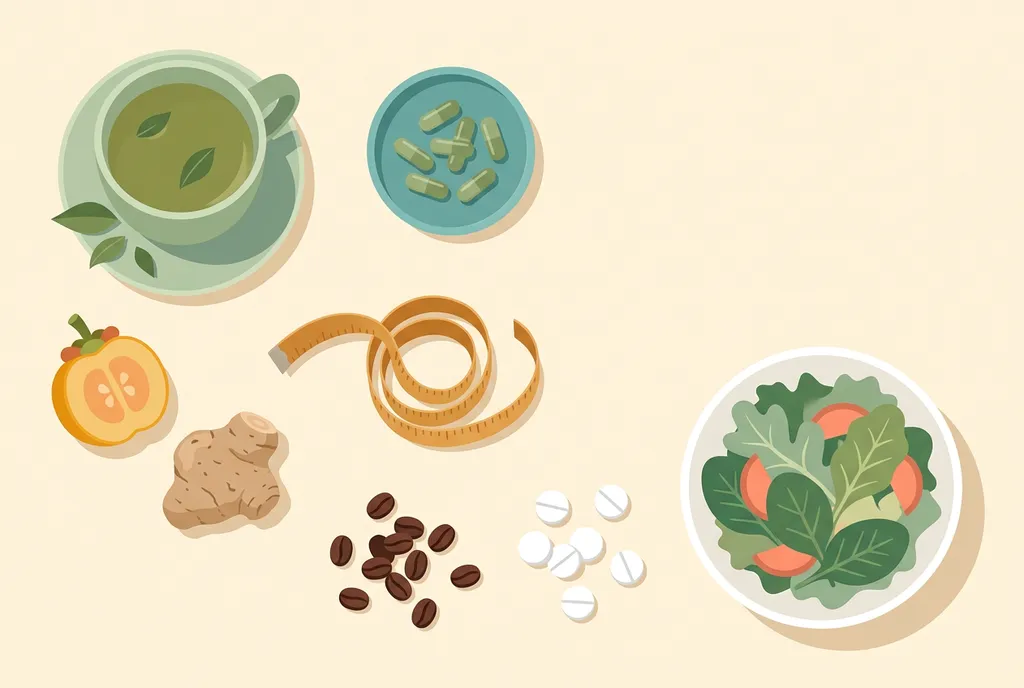
Average extra loss versus placebo in pooled trials, mostly short ones:
| Ingredient | Extra loss | Verdict |
|---|---|---|
| Green tea (outside Japan) | About 0 | None shown |
| Chromium | 0.5 kg (1 lb) | Tiny |
| Garcinia | 0.9 kg (2 lb) | Tiny; gone in better trials |
| CLA | 1.1 kg (2.4 lb) | Small |
| Glucomannan | Up to 1.3 kg (3 lb) | None to small |
| Chitosan | 1.8 kg (4 lb) | Small |
The bigger risk: hidden drugs
From 2007 to 2016, the FDA flagged 776 supplements that contained unapproved drug ingredients, almost always left off the label. Of these, 317 (41%) were sold for weight loss, and 85% of those contained sibutramine, a diet drug pulled from the US market in 2010 because of heart risks. Some products flagged twice had different hidden drugs the second time (Tucker et al., 2018).
The NIH ODS adds that bitter orange can cause chest pain, a faster heart rate and higher blood pressure, and that yohimbe doesn't help weight loss and can cause severe side effects, including heart attack. Be wary of claims like "magic diet pill", "melt away fat" or "lose weight without diet or exercise" (NIH ODS).
What to do instead
The NIH ODS says the best way to lose weight and keep it off is a healthy eating pattern, fewer calories and regular exercise, under the guidance of your health care provider. Tracking portions? A kitchen food scale takes the guesswork out of serving sizes.
Talk to your doctor before trying one, especially if you have high blood pressure, diabetes, heart disease, liver disease or another medical condition (NIH ODS). If you take prescription medicines or are pregnant or breastfeeding, check with your doctor or pharmacist first, and never stop or change a medicine on your own. If you're losing weight without trying, see your doctor (NHS). If you get chest pain or a racing heart on a supplement, stop it and get emergency help right away; yellow skin or eyes, or darker pee than usual, also need an urgent appointment (NHS).
The bottom line
No supplement has strong evidence for meaningful weight loss. Even the ingredients that beat placebo in pooled trials did so by only about 1 to 4 pounds on average, and weight-loss products are one of the two kinds of supplements the FDA most often finds with hidden drugs. Spend the money on food, movement and a talk with your doctor.