
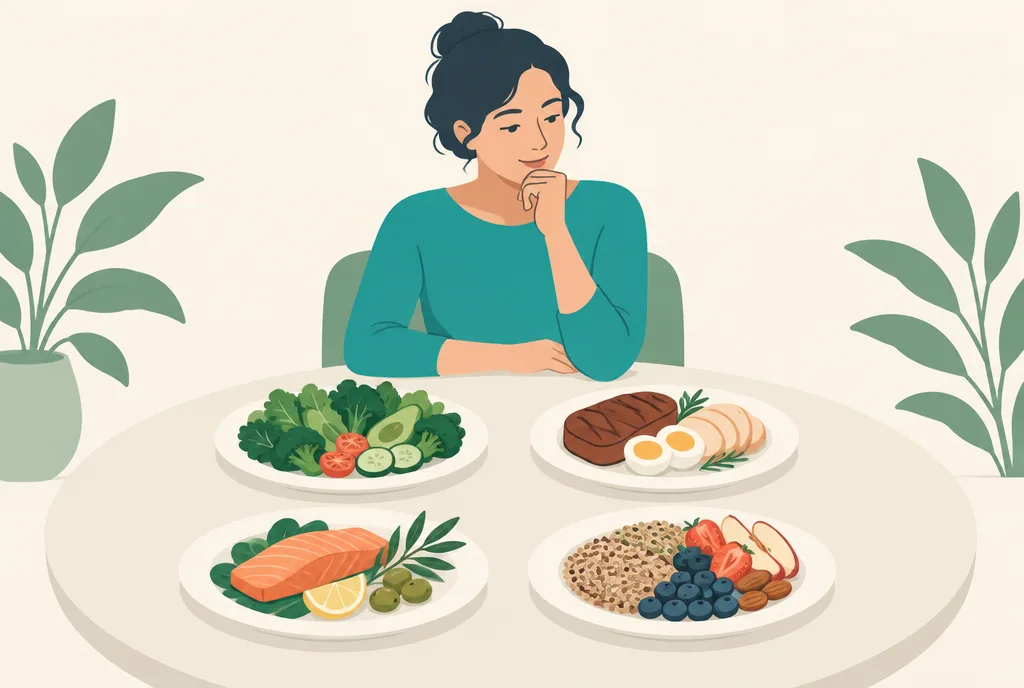
Diet is the most powerful supplement signal
Most supplement advice ignores the most important variable: what you eat. Your dietary pattern determines which nutrients you regularly consume, which are absent from your food supply, and which you might absorb poorly. A well-designed supplement protocol starts with an honest assessment of your diet — not with a generic multivitamin that ignores everything specific about you.
In our recommendation engine, diet carries the highest weight of any input factor (20/50 points) — calibrated against systematic reviews showing that dietary pattern is the most accurate predictor of specific deficiencies at the population level. Vegan diets show 93–95% rates of B12 deficiency in systematic reviews. That is not a small signal. Here is what the evidence shows for each major pattern.
Take the free supplement quiz →
---
Vegan and whole-food plant-based
Vegan diets have the most clearly defined gaps in the literature — not because they are unhealthy, but because animal products are the primary source of several critical nutrients.
Vitamin B12 is non-negotiable. There is essentially no reliably absorbed B12 in plant foods — fermented foods, algae, and mushrooms contain analogues that do not function properly in humans. Deficiency develops slowly as body stores deplete, but the consequences — neurological damage, megaloblastic anemia — are serious and sometimes irreversible. Take methylcobalamin B12, 1,000–2,000 mcg/day or 2,000 mcg three times weekly.
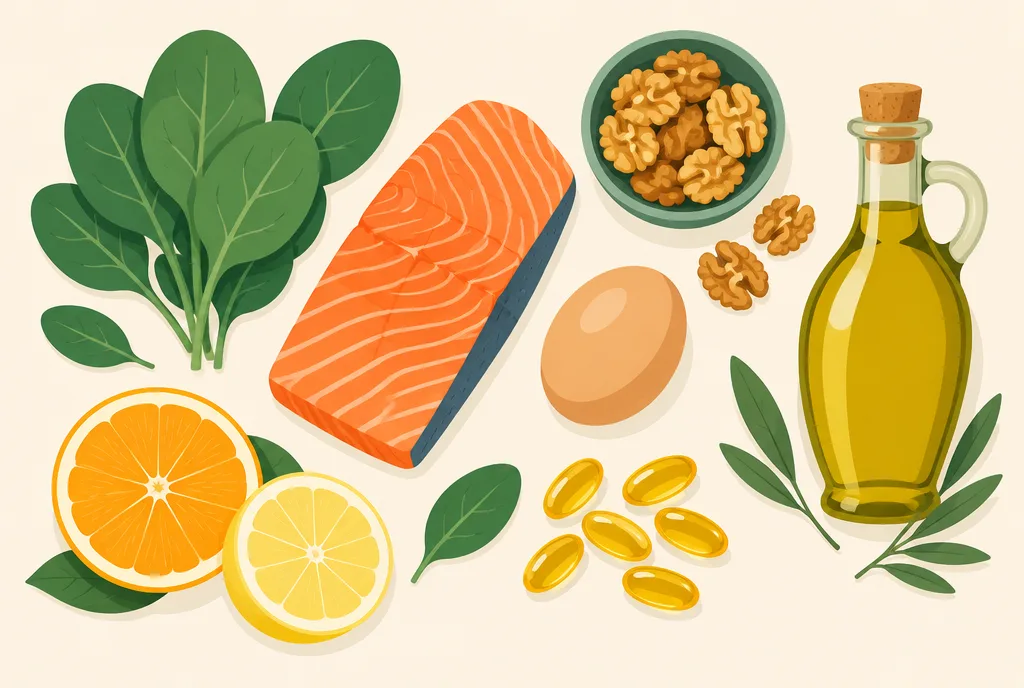
Omega-3 is the second non-negotiable. Plant-based ALA from flax, walnuts, and chia converts to EPA at roughly 5–10% efficiency and to DHA at less than 1% — too inefficient to meet brain and cardiovascular needs. Use algae oil — the original source fish get their omega-3 from — providing at least 500 mg combined EPA+DHA per day.
High-priority after those two:
- Vitamin D3 — vegan D3 from lichen is widely available and performs equivalently to animal-derived D3; it is 2–3x more effective than plant-sourced D2 at raising serum 25(OH)D.
- Iron — non-heme iron absorbs at 2–20% vs. 15–35% for heme iron; pair iron-rich meals with vitamin C (citrus, bell peppers), and test ferritin before supplementing.
- Zinc — phytic acid in legumes, grains, and seeds cuts absorption, so vegans need roughly 50% more; zinc picolinate is the best-absorbed form.
- Creatine — found only in animal muscle; studies show larger cognitive gains from creatine in vegetarians, precisely because baseline stores are lower.
- Iodine — seaweed is unpredictable and many vegans use non-iodized salt; 150 mcg/day is appropriate.
Ketogenic and low-carb
Keto eliminates most fruits, legumes, and grains — which also eliminates important micronutrient sources. The keto flu (fatigue, headaches, cramps in the first 1–3 weeks) is almost entirely magnesium and electrolyte depletion, because ketosis makes the kidneys excrete more electrolytes. Supplementing 300–400 mg magnesium glycinate or malate is essentially mandatory. Also watch potassium (most adults need 3,500–5,000 mg/day; keto dieters often get far less), folate (leafy greens are restricted — 5-MTHF is preferred over folic acid for MTHFR variants), and vitamin C, since keto restricts the fruits that supply it. Psyllium husk or acacia fiber often helps maintain gut microbiome health.
Carnivore
Meat-only diets are controversial, but the gaps are predictable. Liver contains moderate vitamin C and is the primary animal source of folate — yet most modern carnivore dieters eat mostly muscle meat, which provides almost neither. Historically animals were eaten nose-to-tail; modern carnivore eating requires regular organ meat or supplementation. Magnesium is also present in meat at lower concentrations than in nuts, seeds, and greens, and high protein intake raises magnesium requirements.
Mediterranean and omnivore
Mediterranean diets have the most favorable profile and the most extensive outcome data of any pattern. Even so, three gaps remain: vitamin D (no diet provides enough through food without 3+ servings of fatty fish weekly), magnesium (soil depletion has significantly reduced magnesium in crops over the past 50 years), and omega-3 (unless you eat salmon, mackerel, sardines, or herring 2–3x per week, EPA/DHA intake is likely below optimal).
---
At a glance
| Diet | Biggest gaps | First moves |
|---|---|---|
| Vegan | B12, EPA/DHA, D3, iron, zinc, iodine | B12 1,000–2,000 mcg/day; algae oil 500 mg EPA+DHA |
| Keto/low-carb | Magnesium, potassium, folate, vitamin C | Magnesium glycinate 300–400 mg/day |
| Carnivore | Vitamin C, folate, magnesium | Regular organ meat or supplement |
| Mediterranean | Vitamin D, magnesium, omega-3 | D3 plus fatty fish 2–3x/week |
---
The universal shortlist
Regardless of dietary pattern, three supplements have the broadest evidence base for the general population:
- Vitamin D3 (2,000–4,000 IU/day) — deficiency is near-universal in non-tropical populations.
- Magnesium (300–400 mg/day of glycinate or malate) — depleted by modern farming, stress, and processed food.
- Omega-3 EPA/DHA (500–1,000 mg/day) — inadequate in virtually all Western dietary patterns.
Everything beyond these three depends on your specific diet, lifestyle, and symptoms. Blood testing for B12, iron/ferritin, and vitamin D gives the most accurate assessment — and consult a registered dietitian or physician for guidance tailored to your health history. Our quiz weighs your diet as the primary factor, cross-referenced with your lifestyle and symptoms, to give you a personalized, ranked list.