First, is it really IBS?
Bloating is often caused by gas: fizzy drinks, swallowing air while you eat, or gassy foods like beans, cabbage and lentils. Constipation is another common cause (NHS).
Irritable bowel syndrome (IBS) is more specific: belly pain that keeps coming back, on average at least once a week, linked to bowel movements or to changes in how often you go or what your stool looks like (Lacy et al., 2021). Get it diagnosed by a doctor: celiac disease and inflammatory bowel disease can look similar, and the American College of Gastroenterology (ACG) suggests tests to rule them out when diarrhea is involved.
Take the free supplement quiz →
Psyllium: the fiber with the best evidence for IBS
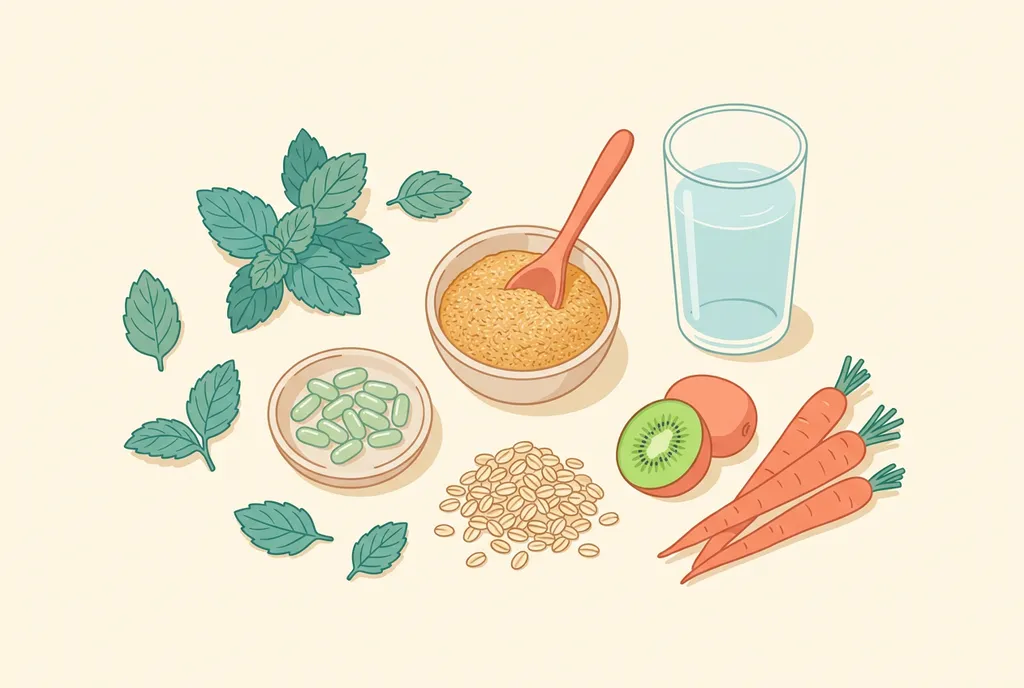
The ACG's 2021 guideline gives soluble fiber a strong recommendation for overall IBS symptoms (moderate-quality evidence), but not insoluble fiber such as wheat bran, which showed no clear benefit in trials (Lacy et al., 2021).
In a Dutch trial, 275 adults with IBS took 10 g of psyllium, 10 g of bran or a rice-flour placebo every day for 12 weeks. In the first month, 57% of the psyllium group reported adequate symptom relief versus 35% on placebo. Bran's only win, in month three, didn't hold up in a stricter analysis, and people taking bran were the most likely to drop out early, mainly because their IBS got worse (Bijkerk et al., 2009).
How to take it: US labels say new users should start with one dose a day, since bloating can increase at first. They also say to mix psyllium husk powder into a full glass (at least 8 oz) of water, because without enough liquid the husk can swell and block your throat, and to take other medicines at least 2 hours before or after it (the NHS says at least 1 hour). Get medical help right away if you have chest pain, vomiting, or trouble swallowing or breathing after a dose. Skip it if you have trouble swallowing, or belly pain with nausea or vomiting (possible bowel blockage), and check with a pharmacist first if you use insulin or other diabetes medicines (NHS). The trial above used 10 g a day.
Peppermint oil: a reasonable option for pain and overall symptoms
The ACG suggests peppermint oil may be used to relieve overall IBS symptoms (conditional, low-quality evidence) (Lacy et al., 2021).
A 2019 meta-analysis of 12 randomized trials (835 adults with IBS) found that, in the 7 trials measuring overall symptoms, people taking peppermint oil capsules were about twice as likely as those on placebo to improve. It also eased abdominal pain (Alammar et al., 2019). A 2022 meta-analysis of 10 trials (1,030 people) agreed, but rated the evidence very low quality and found more side effects (Ingrosso et al., 2022).
But in the largest recent trial, of 189 Dutch adults with IBS, 182 mg capsules three times a day for 8 weeks missed both main goals, pain response and overall relief, though the small-intestine-release version improved pain and IBS severity on secondary measures (Weerts et al., 2020).
How to take it: choose enteric-coated peppermint oil capsules, which release past the stomach. The NHS advises 1 capsule three times a day, 30 to 60 minutes before food, swallowed whole, and not taking it for longer than 2 weeks without speaking to a doctor. It can worsen heartburn, so with reflux skip it or ask your doctor first; also ask first if you are pregnant or have liver disease, gallstones, or a peanut or soya allergy. Keep antacids and acid reducers such as omeprazole or famotidine 2 hours apart from a capsule (NHS). The meta-analyses above didn't report bloating, so judge it by pain and overall symptoms.
Probiotics: guidelines disagree
The ACG suggests against probiotics for overall IBS symptoms (conditional, very low-quality evidence) (Lacy et al., 2021), and the American Gastroenterological Association says probiotics should not be used to treat bloating (Moshiree et al., 2023). UK guidance is more open. The British Society of Gastroenterology says they may help overall symptoms and pain, with no single strain standing out, and says people diagnosed with IBS who want to try one should take it for up to 12 weeks (Vasant et al., 2021). Stop if nothing changes; our probiotics guide covers the best-studied strains.
| Option | ACG 2021 says | Evidence |
|---|---|---|
| Psyllium (soluble fiber) | Recommended | Moderate |
| Peppermint oil capsules | Suggested | Low |
| Low-FODMAP diet | Limited trial | Very low |
| Probiotics | Suggests against | Very low |
| Wheat bran | Not recommended | May worsen IBS |
Food changes and when to see a doctor
The ACG also suggests a limited trial of a low-FODMAP diet, which cuts fermentable carbs and then reintroduces them (conditional, very low-quality evidence), ideally guided by a dietitian (Lacy et al., 2021; NICE).
See a doctor if IBS-like symptoms last more than 4 weeks, to rule out other causes (NHS). Get seen urgently for blood in your stool or black stools, unexplained weight loss, a lump in your belly, or breathlessness, a racing heart and paler skin (possible anemia). Also get checked if symptoms first start after 50, or if bowel cancer or inflammatory bowel disease runs in your family. Women, especially over 50, should get checked if bloating, feeling full quickly, or belly or pelvic pain happens more than 12 times a month, as these can be signs of ovarian cancer (NICE). Pregnant or on prescription medicines? Ask your doctor or pharmacist before starting any supplement.
The bottom line
For confirmed IBS, psyllium has the strongest guideline support, and enteric-coated peppermint oil is a reasonable second option if you don't have reflux. Probiotics are a maybe at best, and bran may make symptoms worse for some people.