
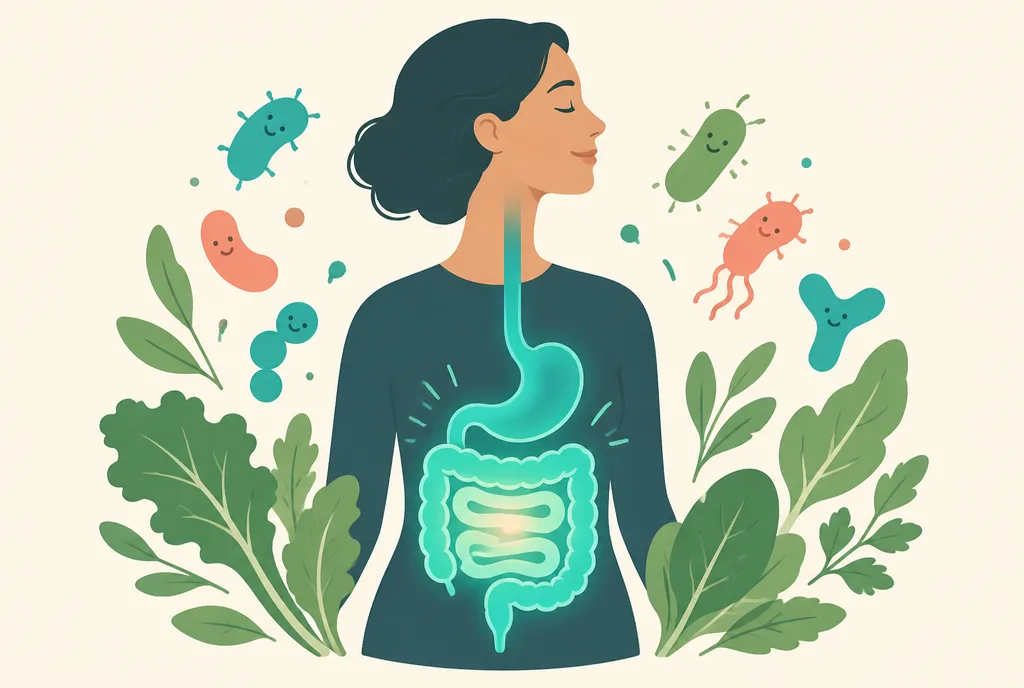
Your gut is doing more than you think
Your gastrointestinal tract houses roughly 70% of your immune system, produces about 95% of your body's serotonin, and hosts trillions of microorganisms that influence your mood, metabolism, and chronic disease risk. The problem: the supplement market has exploded in response, and not all gut health products are created equal. Some have decades of clinical trials behind them; others have little more than a few in-vitro studies and an aggressive marketing budget.
This guide ranks the nine best gut health supplements by the quality of their clinical evidence — Strong means multiple large meta-analyses of RCTs, Moderate means several consistent RCTs, Limited means early data — with exact doses and who benefits most. Higher grades do not always mean take this; the best supplement depends on your specific gut issue.
Take the free supplement quiz →
---
Probiotics — Strong evidence
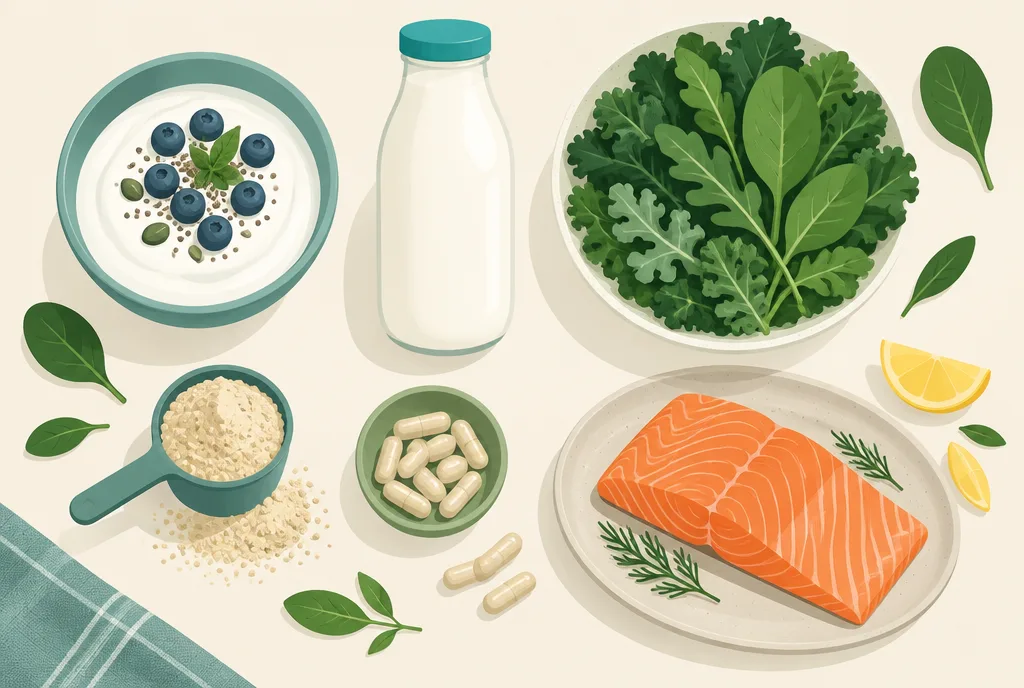
The most studied category in gut health. A 2024 umbrella meta-analysis of 15 systematic reviews found probiotics cut the risk of diarrhea by 56%, nausea by 41%, and bloating by 26% — meaningful reductions, not rounding errors. Strain selection matters enormously: Bifidobacterium bifidum MIMBb75 and Lactobacillus plantarum 299v have the strongest IBS evidence, while Saccharomyces boulardii and L. rhamnosus GG lead for antibiotic-associated diarrhea (NIH ODS). Take 5–20 billion CFU daily — up to 50 billion for acute issues — in enteric-coated capsules. Initial bloating in the first 1–2 weeks is normal; use with care if immunocompromised.
Prebiotics — Moderate evidence
Probiotics get the attention, but prebiotics are the food that determines whether beneficial bacteria thrive. A systematic review of inulin-type fructans found they selectively feed Bifidobacterium, Lactobacillus, and Faecalibacterium prausnitzii, with better intestinal barrier function, laxation, and calcium absorption downstream. Start inulin or FOS at 3–5 g daily and build to 10–15 g to minimize gas; PHGG is gentlest. Caution: prebiotics can worsen IBS-D at higher doses — start very low.
L-Glutamine — Moderate evidence
Glutamine is the primary fuel for the cells lining your small intestine, and it upregulates the tight junction proteins that seal a so-called leaky gut. In a 2019 double-blind RCT in Gut, patients with post-infectious IBS-D who took 5 g three times daily for 8 weeks had a 79.6% response rate versus 5.8% on placebo — a dramatic effect, but strongest where permeability is the real problem. Use free-form powder, 15 g/day. Caution with epilepsy or liver and kidney disease.
Zinc carnosine — Moderate evidence
This chelated zinc-carnosine compound adheres to the gastric lining — plain zinc does not replicate the effect. In the foundational human trial, 37.5 mg twice daily produced a three-fold reduction in NSAID-induced gut permeability — worth knowing for anyone who regularly takes ibuprofen, naproxen, or aspirin. Standard dose: 75 mg twice daily. Do not take with quinolone or tetracycline antibiotics, and monitor copper long-term.
Butyrate, enzymes, and berberine — Moderate evidence
Butyrate is the short-chain fatty acid that fuels your colon cells; an RCT in active ulcerative colitis showed significant improvements in disease severity and inflammation at 300 mg–4 g/day. If you eat plenty of fiber, you likely make enough already. Digestive enzymes offer the fastest relief: a 2023 placebo-controlled RCT in functional dyspepsia improved pain, sleep, and quality of life. Take 1–2 broad-spectrum capsules with each meal; bromelain and papain can interact with blood thinners. Berberine directly reshapes the microbiome — the 409-person PREMOTE trial found it improved both glycemic control and microbiome diversity. 500 mg 2–3 times daily with meals, in 12-week cycles; avoid in pregnancy and check medication interactions.
Collagen and omega-3s — supporting roles
Collagen peptides (10–20 g/day) reduced bloating in an 8-week study, but the human trial base is still Limited. Omega-3s (1–3 g EPA+DHA daily) shift the microbiome toward SCFA-producing, anti-inflammatory bacteria — a solid adjunct rather than a first-line fix.
---
At a glance
| Supplement | Evidence | Best use case | Time to effect |
|---|---|---|---|
| Probiotics | Strong | IBS, antibiotic diarrhea, general microbiome | 4–8 weeks |
| Prebiotics (inulin/FOS) | Moderate | Microbiome diversity, constipation | 2–4 weeks |
| Zinc carnosine | Moderate | NSAID gut damage, gastric ulcers | 4–8 weeks |
| L-Glutamine | Moderate | Post-infectious IBS-D, leaky gut | 8 weeks |
| Butyrate | Moderate | UC, colonocyte support, IBD | 4–8 weeks |
| Digestive enzymes | Moderate | Dyspepsia, post-meal bloating | Immediate |
| Berberine | Moderate | Dysbiosis, metabolic GI conditions | 4–12 weeks |
| Collagen peptides | Limited | Mild bloating, early leaky gut support | 8 weeks |
| Omega-3s | Moderate | Microbiome diversity, IBD support | 8–12 weeks |
---
The bottom line
Match the supplement to your symptom: probiotics for IBS and antibiotic recovery, glutamine for permeability-driven IBS, enzymes for bloating after meals, zinc carnosine if NSAIDs are part of your life. Not everything marketed as a gut health supplement is worth buying — spend your money on what matches your specific symptoms, not the best packaging. This is informational, not medical advice: consult a healthcare provider before starting anything new, especially if you are pregnant, breastfeeding, or on medication. Not sure where to start? Our free quiz matches supplements to your actual symptoms.