
The menopause aisle has a signal problem
If you have been told to try a supplement before considering hormone therapy, you are standing in the worst aisle of the entire wellness industry — wild yam creams, dong quai, evening primrose, $70 adaptogen blends, almost none of it backed by clinical evidence.
The good news: a handful of supplements do have real randomized-trial evidence. The catch: each one works for one symptom — hot flashes, sleep, mood, or bone density — not all of them at once. Here is what the trials actually support, symptom by symptom, at the doses they used.
Take the free supplement quiz →
---
Hot flashes and night sweats
About 75% of women in the menopausal transition get hot flashes, and the supplement evidence here is real but modest — typically a 20–30% reduction over placebo, well below what hormone therapy delivers.
Soy isoflavones bind weakly to estrogen receptors. A 2012 meta-analysis of 19 RCTs found they cut hot flash frequency by 20.6% and severity by 26.2% (PubMed, 2012), and a 2014 analysis found products with over 18.8 mg of genistein per day were more than twice as effective (Br J Clin Pharmacol, 2014). Take 50–60 mg/day with at least 18 mg genistein for a minimum of 12 weeks; whole-soy foods like tofu and edamame work too. Women with a history of estrogen-receptor-positive breast cancer should discuss concentrated soy extracts with their oncologist first.
ERr 731, a standardized Siberian rhubarb extract sold as Estrovera (one 4 mg tablet daily), produced significant reductions on the Menopause Rating Scale across eight trials in a 2024 meta-analysis, with effect sizes larger than most plant-based options (PMC, 2024). The brand matters: generic rhubarb root is not the same extract.
Black cohosh is the most popular option and the most contested. A 2024 review found it effective for vasomotor symptoms in early menopause (PMC, 2024), while other systematic reviews conclude much of the benefit is placebo response. If you try it, use Remifemin specifically — the 40 mg/day extract used in the positive trials — for 8 weeks, and stop if nothing changes. Rare liver-toxicity reports mean no stacking with alcohol, and discontinue if you develop jaundice or abdominal pain.
- Skip for hot flashes: evening primrose oil, wild yam cream (it does not convert to progesterone in the body), dong quai, maca, and red clover — all null or near-null in controlled trials.
---
Sleep and mood
Melatonin rhythms flatten in menopausal women. A 2025 meta-analysis found supplementation significantly improved sleep quality on the Pittsburgh Sleep Quality Index (PMC, 2025). Start with 0.3–1 mg taken 30–60 minutes before bed — most over-the-counter melatonin is wildly overdosed at 5–10 mg, which causes grogginess and may worsen sleep.
Magnesium glycinate improved sleep onset latency in a 2022 systematic review (PMC, 2022), and a 2017 meta-analysis found magnesium modestly reduced anxiety, especially with low baseline intake — a gap in roughly half of US adults. Take 200–400 mg in the evening; avoid magnesium oxide. For mild low mood, EPA-dominant fish oil (1–2 g/day of EPA) and standardized saffron extract (28–30 mg/day) have limited but real trial support. Supplements are not a substitute for therapy or SSRIs in moderate-to-severe cases.
---
Bone loss — the symptom you cannot feel
Women lose roughly 10% of bone mass in the first 5 years post-menopause, and the evidence here is the strongest in the entire menopause category. A 2020 meta-analysis in postmenopausal women found combined calcium and vitamin D significantly increased bone mineral density at the lumbar spine and femoral neck — the sites that fracture (PubMed, 2020).
- Vitamin D3: 1,000–2,000 IU/day — more if your blood 25(OH)D is under 30 ng/mL. Get tested.
- Calcium: 1,200 mg/day total, food first. If your diet already provides 800 mg, supplement only 400 mg — over 2,000 mg/day is associated with cardiovascular risk.
- Vitamin K2 (MK-7): 100–180 mcg/day helps direct calcium toward bone and away from arteries; a 2019 meta-analysis showed modest lumbar spine gains (PubMed, 2019). Often combined with D3 in one capsule.
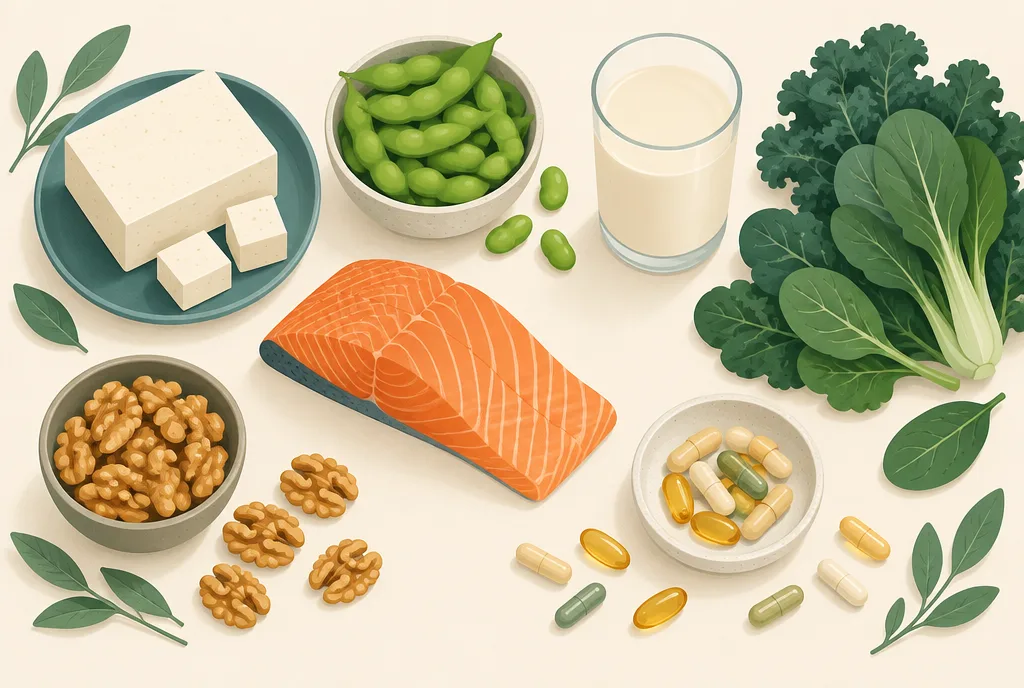
Match the supplement to the symptom
| Symptom | Best-evidence option | Evidence grade |
|---|---|---|
| Hot flashes / night sweats | Soy isoflavones, ERr 731, black cohosh | Moderate |
| Sleep disturbance | Melatonin, magnesium glycinate | Moderate |
| Anxiety / low mood | Magnesium, omega-3, saffron | Limited to Moderate |
| Bone loss | Vitamin D3 + calcium, vitamin K2 | Strong |
| Vaginal dryness | Soy isoflavones, sea buckthorn oil | Limited |
| Brain fog, weight gain | None with strong evidence | Insufficient |
---
The bottom line
Skip the marketing-heavy menopause complex blends — they under-dose the actives that actually work. Match one supplement to your worst symptom, use the trial dose and form, and give it 8–12 weeks. And none of this replaces hormone therapy: if your symptoms are severe and you have no contraindication, talk to your clinician about MHT — the supplement evidence is real but modest by comparison.
This article is educational, not medical advice. Supplements can interact with prescription medications and may not suit women with hormone-sensitive cancers, clotting disorders, or liver disease. Talk to a qualified clinician before starting anything new, especially if you use MHT, tamoxifen, SSRIs, or anticoagulants.