
The Most Overlooked Mineral
Magnesium is a cofactor in more than 300 enzyme systems in the human body — from ATP energy production to DNA synthesis to muscle contraction to nerve signaling (NIH ODS). Yet one national survey found 68% of US adults ate less magnesium than the RDA (King et al., 2005). Eating less than recommended isn't the same as being deficient, though — there is no current national data on magnesium status in the US.
Take the free supplement quiz →
Why Do So Many People Fall Short on Magnesium?
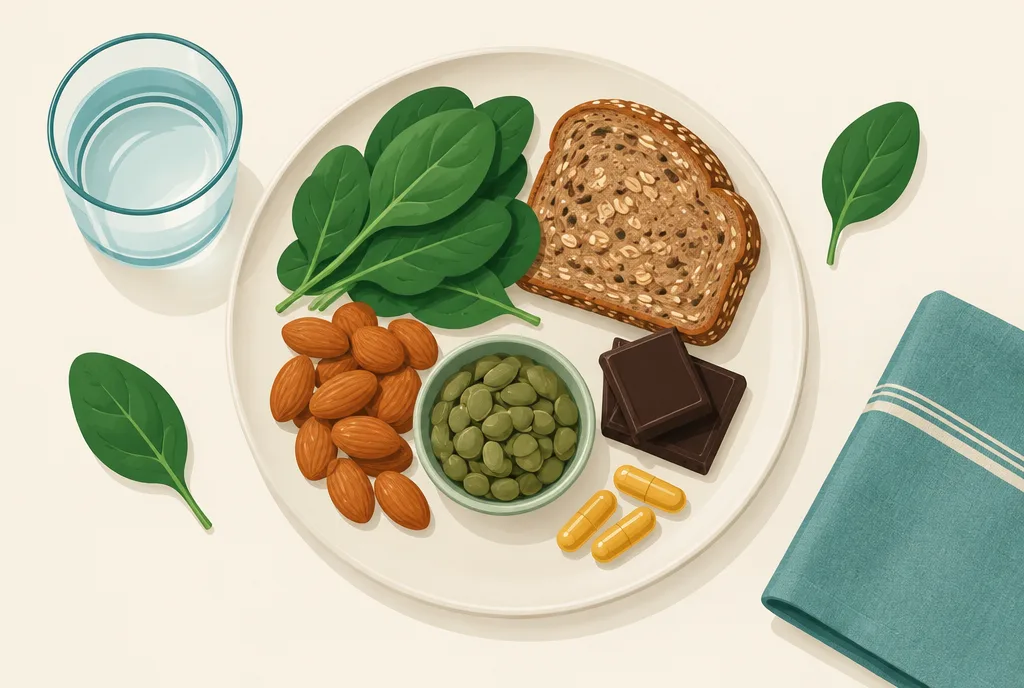
Food choices: Some older food data suggest certain nutrients in vegetables have declined, likely due to higher-yield crop varieties rather than soil depletion (Davis et al., 2004). The bigger issue is what we eat: leafy greens, nuts, seeds, beans, and whole grains are the richest sources, and many diets are light on them.
Processed food diets: Refining grains strips out the magnesium-rich bran and germ. White bread has far less magnesium than whole-wheat bread (roughly two-thirds to three-quarters less).
Stress: Some researchers think stress and low magnesium may feed each other, but this hasn't been proven in people.
Alcohol: Heavy drinking increases magnesium loss in urine.
Health conditions and medications: Older adults, people with type 2 diabetes or digestive conditions such as Crohn's or celiac disease, and people on long-term PPIs or certain diuretics are more likely to run low.
The Forms of Magnesium — Which Should You Take?
The form affects absorption and how well your stomach tolerates it:
- Magnesium Glycinate: Bound to glycine (an amino acid). Well tolerated and gentle on the stomach; a good default choice.
- Magnesium L-Threonate: Raised brain magnesium in rat studies; human evidence for memory is limited.
- Magnesium Malate: Another well-tolerated form.
- Magnesium Oxide: Poorly absorbed and more likely to cause loose stools.
- Magnesium Citrate: Well absorbed, but can have a laxative effect at higher doses.
Possible Benefits
Sleep quality. Magnesium acts on calming GABA signaling in the brain. Some small trials suggest magnesium may modestly help sleep, especially in people with low intake, but the evidence is weak: a 2026 review of 12 randomized trials found it doesn't support magnesium as a routine insomnia treatment (Lopresti et al., 2026). For ongoing insomnia, cognitive behavioral therapy for insomnia (CBT-I) is the recommended first-line treatment.
Stress and anxiety. A 2017 review found early, low-quality evidence that magnesium may ease mild anxiety (Boyle et al., 2017). If anxiety is affecting your daily life, talk to a healthcare provider.
Muscle function and recovery. Athletes lose some magnesium in sweat, though usually only small amounts. True magnesium deficiency can cause cramps and weakness, but magnesium supplements don't seem to help typical night-time leg cramps (Cochrane review, 2020).
Cardiovascular health. Higher dietary magnesium is linked to lower risk of stroke and heart failure in observational studies, and supplements may lower blood pressure slightly.
Dosing Guidelines
The RDA for adults is 310–420 mg/day from all sources, and food should come first. If you supplement, research suggests 250 mg/day; stick to products that keep you at or below 350 mg/day from supplements — the NIH tolerable upper limit, above which diarrhea, nausea, and cramping become more likely.
Timing: Many people take it in the evening; timing hasn't been well studied.
Safety: Don't take magnesium supplements if you have kidney disease unless your doctor advises it. Take tetracycline or quinolone antibiotics at least 2 hours before or 4–6 hours after magnesium, and separate magnesium from osteoporosis drugs (bisphosphonates) by at least 2 hours. If you're pregnant or take other prescription medications, check with your doctor or pharmacist first.
Evidence Level
Evidence: moderate for the benefits of a magnesium-rich diet; limited for supplements. A 2016 meta-analysis of 40 cohort studies linked higher dietary magnesium to lower risk of type 2 diabetes, stroke and death (Fang et al., 2016), but this kind of study can't prove cause and effect, and it found no link with overall heart disease. A 2017 systematic review suggested possible benefit for mild anxiety, though the authors rated the evidence quality as poor (Boyle et al., 2017).